Gloria Bog
The Greatest Beer Run Ever: A Memoir of Friendship, Loyalty, and WarGloria Bog is a working landscape in the narrator’s childhood: a source of turf and hard labor, but also a place of striking natural beauty. Its importance rests on that double character. The bog helps sustain the household, while the work it demands gives the narrator a measure of independence beyond it.
Work and the Family
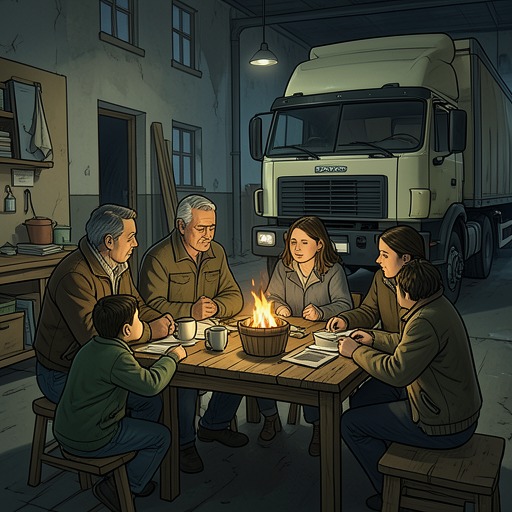
From March through September, the narrator’s father organized the children’s labor on the bog, as well as in the barrack garden and on the conacre he had taken. He secured a contract from the Reverend Mother at the Mercy Convent in Boyle to supply turf to its laundry, keeping it for several years. The narrator suspects that his father’s good looks and his position as a widower with seven young children helped him win work that others needed more urgently.
The work was strenuous and repetitive: the children scattered the cut sods, footed and windrowed them, and clamped them to dry. The narrator was often kept from school because he was the most useful child, and at the time did not mind. At summer’s end, he drew most of the saved turf to the road with a jennet and cart, where lorries collected it for the convent laundry. His father later recalled the money he had made from the Reverend Mother, whom he jokingly called the “auld Rev,” and bought a new car that filled the children with pride.
The labor fell harder on the girls. The narrator had stamina and found that strenuous physical work could empty the mind, but resented being expected to make his sisters work when they would rather play house, make daisy chains, roll around, or jump from the banks. When their father was away and expected back, he sometimes threatened to report them if they did not work, though he does not think he ever did. The bog was thus also a setting for the children’s unequal burdens and for the narrator’s uncomfortable position between his father’s demands and his sisters’ play.
Landscape and Passage
The bog’s appearance outlasts the account of the work. The narrator remembers acres of pale sedge like an inland sea, broken by stunted birch trees, with dark cuts in the turf banks and soft light on the heather. The trees seemed like green flowers. Whether the children crossed barefoot over stone stiles and through fields by Langan’s, or came along the bog road with the jennet and cart, the view opened toward the pale sedge and heather stretching from the evergreens in the graveyard high on Kileelan to the low mountains.
Crossing into that expanse felt like entering a different world. The description does not erase the labor that shaped the place: the turf banks remain visible in the same landscape as the sedge and heather. Instead, work and beauty occupy it together, making the bog at once a productive tract and a world the narrator learns to love.
Labor, Leverage, and Freedom
The narrator did not resent the work itself. Its physical demands suited his stamina, and his usefulness became a bargaining counter: so long as his ability to work remained partly hidden, he could insist that he be trusted to go alone on the river. If he could be trusted on the bog, he reasoned, he could be trusted in the boat. The bog’s role therefore extended beyond turf-making; it became part of the practical negotiation through which he secured solitude elsewhere.
That freedom was conditional, emerging from the very labor imposed by his father. Gloria Bog holds together the constraints of the children’s working lives and the narrator’s attachment to the countryside. Its remembered expanse is not merely a backdrop to family work: it is a place where obligation, physical endurance, and the beginnings of independence meet.